Source Variable Speed Liquid Paint Disperser for Chemicals, Paints, and Cosmetics
Compare 30 variable speed liquid paint disperser units from Zhengzhou suppliers. These machines feature automatic operation, spiral stirring, and customizable volumes for processing viscous fluids and liquids with suspended solids in chemical and daily chemical applications; compare the available evidence and request quotations based on your requirements.
Key considerations
Products List
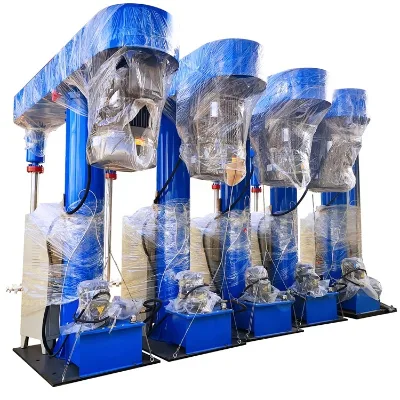


Comprehensive Sourcing Guide
Variable Speed Liquid Paint Disperser Sourcing Guide
Procuring a variable speed liquid paint disperser requires a careful balance between mechanical capability and operational flexibility. Buyers must prioritize machines that offer precise control over mixing dynamics, as this directly impacts the quality of the final emulsion or chemical product. The core value lies in the ability to adjust spindle speeds to match the viscosity of the material being processed, ensuring efficient dispersion without damaging sensitive components. This adaptability is critical for manufacturers who handle diverse formulations, ranging from thin liquids to highly viscous fluids with suspended solids.
The market offers a range of configurations, often centered around robust motor systems and customizable drum volumes. Sourcing decisions should focus on verifying the actual power output and the structural integrity of the mixing drum, which is typically constructed from stainless steel or carbon steel. Understanding the specific mechanical limits, such as maximum loading capacity and mixing time, allows procurement teams to align equipment capabilities with their production volume requirements. This alignment prevents bottlenecks and ensures that the machinery can handle the intended batch sizes efficiently.
Product Scope and Observed Listing Signals
Current market listings for these dispersers indicate a price range between $998 and $29,998, reflecting significant variation in build quality, motor power, and customization options. Most suppliers operate with a minimum order quantity of one unit, catering to both small-scale pilot operations and larger industrial setups. The observed product names often include terms like "emulsion paint dispersion machine," highlighting the primary application in paint and coating manufacturing. Buyers should note that while the price range is broad, the underlying technology often shares common core components, such as high-performance motors and variable speed drives.
Listings frequently highlight key selling points such as energy saving and automatic operation, which are crucial for reducing long-term operational costs. The voltage specifications typically span from 220V to 440V, indicating the need for careful electrical infrastructure planning at the installation site. Additionally, many suppliers offer video outgoing inspections, providing a layer of transparency and quality assurance before shipment. These signals suggest a mature supply chain where buyers can expect detailed visual verification of the machine's condition and functionality prior to final payment.
Technical Specifications to Verify
The power rating of the disperser is a critical specification, with observed ranges extending from 15KW to 55KW, and specific models like the FS-30 featuring a 30KW motor. Buyers must verify that the power input matches the viscosity and volume of the materials they intend to process. The mixing time, often cited between 5 to 8 minutes, provides a baseline for throughput estimation, but this can vary based on the specific formulation and desired consistency. Ensuring that the motor can sustain the required torque at variable speeds is essential for preventing mechanical failure during high-load operations.
The spindle speed range, typically observed between 0 and 1650 r.p.m., offers the flexibility needed for different processing stages. Buyers should confirm that the speed control mechanism is reliable and provides smooth transitions, as abrupt changes can affect product quality. The mixing drum shape, often a circular groove, and the stirring type, such as spiral, are designed to optimize fluid dynamics and ensure uniform mixing. Verifying these mechanical details against the supplier's technical datasheets helps prevent mismatches between equipment capabilities and production needs.
Compliance and Safety Documentation
Certification status is a primary concern for international buyers, with CE certification being a commonly observed standard for machinery exported to various regions. Procurement teams must request valid certification documents to ensure the equipment meets local safety and electromagnetic compatibility regulations. The absence of proper documentation can lead to customs delays or operational bans in regulated markets. Buyers should also verify if the supplier provides additional safety features, such as emergency stop buttons and protective guards, which are essential for operator safety.
Warranty terms, typically observed as one year, provide a baseline for post-purchase support, but buyers should clarify the scope of coverage. It is crucial to understand what components are included and whether the warranty covers labor costs for overseas service. Many suppliers offer engineers available to service machinery abroad, which is a valuable asset for minimizing downtime. Buyers should negotiate clear terms for response times and spare parts availability to ensure that any technical issues can be resolved promptly.
Cost Drivers and Commercial Terms
The total cost of ownership is influenced by several factors, including the customization options and the material of construction. Buyers can choose between stainless steel and carbon steel for the main material, with stainless steel typically commanding a higher price due to its corrosion resistance and hygiene benefits. Customization of volume, ranging from 100L to 5000L, also impacts the final price, as larger drums require more material and more robust structural support. Understanding these variables helps buyers budget accurately and avoid unexpected costs during the customization process.
Packaging and logistics are additional cost drivers, with wooden box packaging being a standard method to protect the machinery during transit. Buyers should consider the weight of the equipment, which can be around 900kg for certain models, when planning for freight and installation. The production capacity, often listed as 100 units, suggests that suppliers have the infrastructure to handle bulk orders, but lead times may vary based on customization requirements. Negotiating clear delivery terms and incoterms is essential to manage logistics risks and ensure timely receipt of the equipment.
Supplier Qualification and Quality Control
Supplier qualification involves verifying their production capabilities and quality control processes. Buyers should request evidence of video outgoing inspections, which provide a visual record of the machine's condition before shipment. This practice indicates a commitment to transparency and helps identify any potential defects or assembly issues early in the process. Additionally, buyers should assess the supplier's ability to provide detailed technical documentation and support, which are critical for smooth installation and operation.
The availability of customization services is another key indicator of supplier flexibility and expertise. Suppliers that offer customizable designs, colors, and logos demonstrate a customer-centric approach that can enhance brand integration. Buyers should evaluate the supplier's responsiveness to specific technical queries and their willingness to tailor the machine to unique production requirements. A qualified supplier will provide comprehensive guidance on installation, operation, and maintenance, ensuring that the buyer can maximize the equipment's performance and longevity.
Long-Term Procurement Checks
Long-term procurement success depends on establishing a reliable supply chain for spare parts and ongoing technical support. Buyers should verify the availability of critical components, such as motors and seals, to minimize downtime during maintenance. Suppliers that offer comprehensive after-sales service, including overseas engineering support, provide an added layer of security for international operations. Establishing a clear communication channel with the supplier ensures that any technical issues can be addressed quickly and effectively.
Regular performance monitoring and preventive maintenance are essential for extending the lifespan of the disperser. Buyers should develop a maintenance schedule based on the manufacturer's recommendations and track key performance indicators, such as mixing efficiency and energy consumption. By maintaining detailed records of machine performance and service history, buyers can identify trends and plan for future upgrades or replacements. This proactive approach ensures that the equipment continues to meet production standards and delivers a strong return on investment over time.
FAQs
What is the voltage range for this machine?
The voltage range is 220V to 440V. This ensures compatibility with various industrial power standards. The system operates reliably within this specific electrical input range for consistent performance.
Can the barrel volume be customized?
Yes, the barrel volume can be customized from 100L to 5000L. This flexibility allows buyers to select a capacity that matches their specific production needs and batch sizes effectively.
Which certifications does the equipment hold?
The equipment holds CE certification. This indicates compliance with essential health, safety, and environmental protection requirements for products sold within the European Economic Area and other recognized markets.
How long is the warranty period?
The warranty period is one year. This coverage provides peace of mind for buyers regarding the initial operational phase and ensures support for any manufacturing defects during this timeframe.
What is the maximum loading capacity?
The maximum loading capacity is 1000L. This limit defines the upper volume of material the machine can handle safely during a single mixing cycle without compromising operational stability or safety.
Can the main material be customized?
Yes, the main material can be customized to Carbon Steel or Stainless Steel. Buyers can choose the material that best suits their specific chemical processing requirements and corrosion resistance needs.
What is the mixing time per batch?
The mixing time is typically between 5 to 8 minutes. This duration ensures thorough dispersion of emulsion paint while maintaining high efficiency for continuous production workflows in industrial settings.